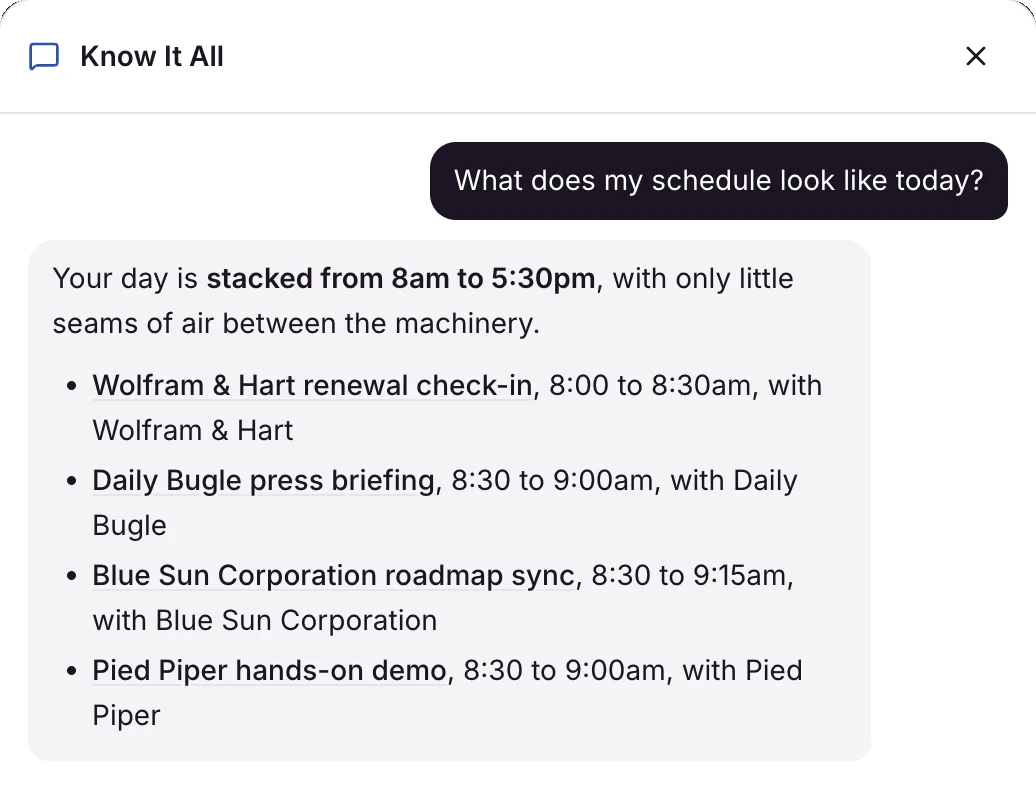
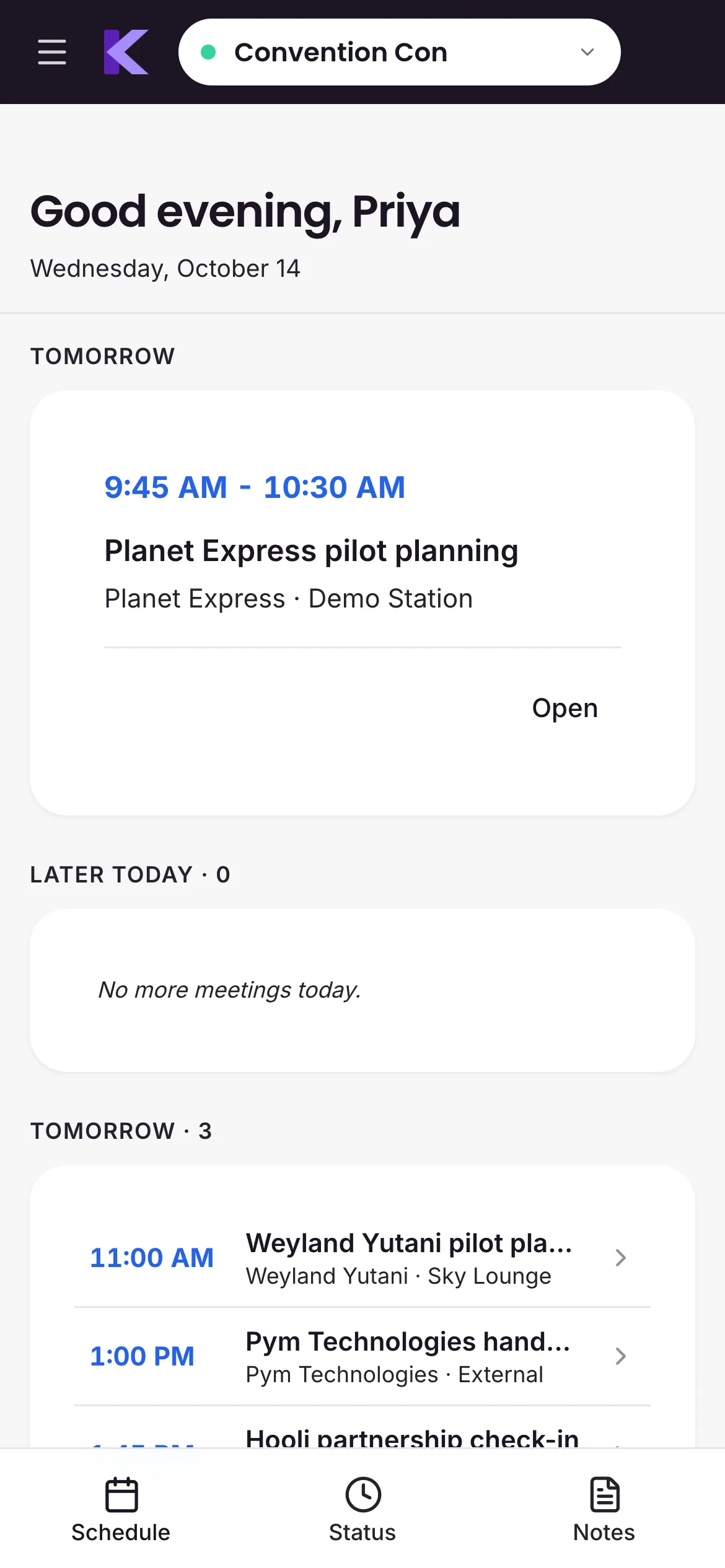
None of that adds up to an answer. The cost is on one invoice. The meetings are on a different document. The pipeline impact will not show up in Salesforce for weeks if the team members update their records at all.
The honest answer is that nobody knows yet. And that answer should not be acceptable for a $50,000 investment.
Why the Answer Is Always Late
The ROI of a trade show is not technically unknowable. The booth cost is known. The number of meetings held is knowable. The organizations covered can be tracked. The revenue attached to those organizations can be queried from the CRM. The math exists, and the trade show ROI guide walks through it with a calculator. The problem is that none of those data points live in the same place, and pulling them together manually is a multi-hour exercise that happens after most other priorities.
How knowhere Handles Financial Tracking
Every event in knowhere has a Budget & revenue section in its Settings. The event manager enters the costs as line items: hard costs, booth build, travel, meals, and other. Revenue from attributed deals is entered as one figure when the data is available.
The event Overview dashboard, described on the platform page, shows the full picture: total cost, attributed revenue, net return, and ROI as a calculated number, alongside meeting count, attendance, and coverage metrics.
What the Dashboard Shows
Cost per meeting is the number that actually tells you whether the booth was run efficiently or scattered. An event with 60 meetings attended and a $60,000 booth cost is $1,000 per meeting. Whether that is good depends on the organization quality. knowhere shows you both.
When this data is assembled before the flight home instead of after a week of CRM updates, the conversation Monday morning is different. The answer is a number with context.
What knowhere Does Not Do
Revenue attribution in knowhere is manual. There is no automatic connection to the CRM that pulls opportunity value and assigns it to events. The honest claim is that knowhere gives you a structured place to connect the costs you know to the outcomes your team produced. That is solvable and it is more than most teams have today.