The sales leader asks it Monday morning. The event manager opens the spreadsheet. There is a list of confirmed meetings. There is a separate list of targets that was built before the event. Nobody tracked which organizations from the target list actually got covered. The answer is somewhere in the overlap between two separate documents that were never connected to each other.
By then, the contacts have left the venue. The window to schedule a last-minute meeting on the floor has closed. Whatever organizations slipped through are now just names on a post-event follow-up list with no in-person interaction behind them.
What Target Tracking Does
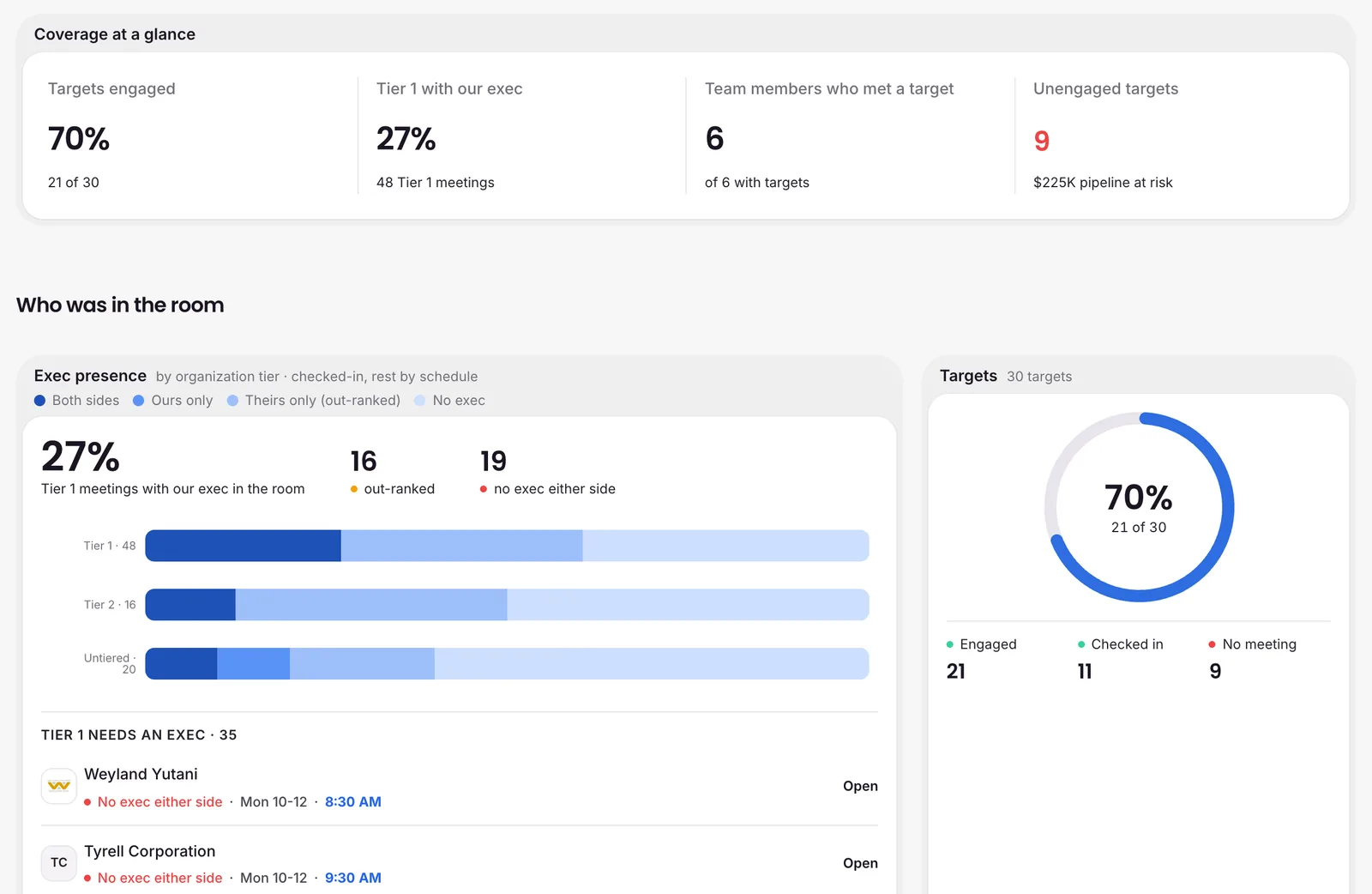
In knowhere, an organization can be flagged as a target. Once flagged, it appears on the Engagement Scoreboard, a per-event view that shows every target, who owns it, and whether it was covered.
Covered means a meeting was booked with that organization at the event. Met means the meeting was checked in. The scoreboard tracks both, plus self-booked and coverage percentage by owner. The team members with the lowest coverage percentage sort to the top so the manager can see where the gaps are and act on them before the event ends, not after.
There is also an unmet targets list. During the event, this lists every flagged organization with no meeting scheduled while there is still time on the floor.
Coverage Risk Alerts
knowhere also flags coverage risk: organizations assigned to a team member who is not staffed on the event. The owner who was supposed to be at the booth is sick, or their flight got canceled, or they were pulled for a different priority. Their organizations are still on the target list but there is no one there to take them. knowhere surfaces that before the event starts.
Owners
Each organization has a company-wide owner in knowhere. Ownership determines who the Engagement Scoreboard holds accountable, who gets the organization’s Brief auto-scoped to them, and who appears as the coverage risk when they are not assigned to an event. Organization ownership can be assigned individually or in bulk from the team settings page.
The Business Case
Targets exist because not every meeting at an event is equal. The handful of named organizations that carry most of your pipeline or renewals should not get the same level of rigor as a general floor meeting. knowhere makes that distinction operational.
The question of whether the right organizations were covered should have an answer that takes seconds, not a 45-minute reconciliation exercise on the Monday after the event.