The team member does not know any of that. The account manager who carries this relationship is not at the event this year. The prep document that would have covered it was in someone’s email drafts. The team member walks into a 30-minute meeting with a general pitch because that is all they have.
That meeting could have been something else.
What Briefs Do
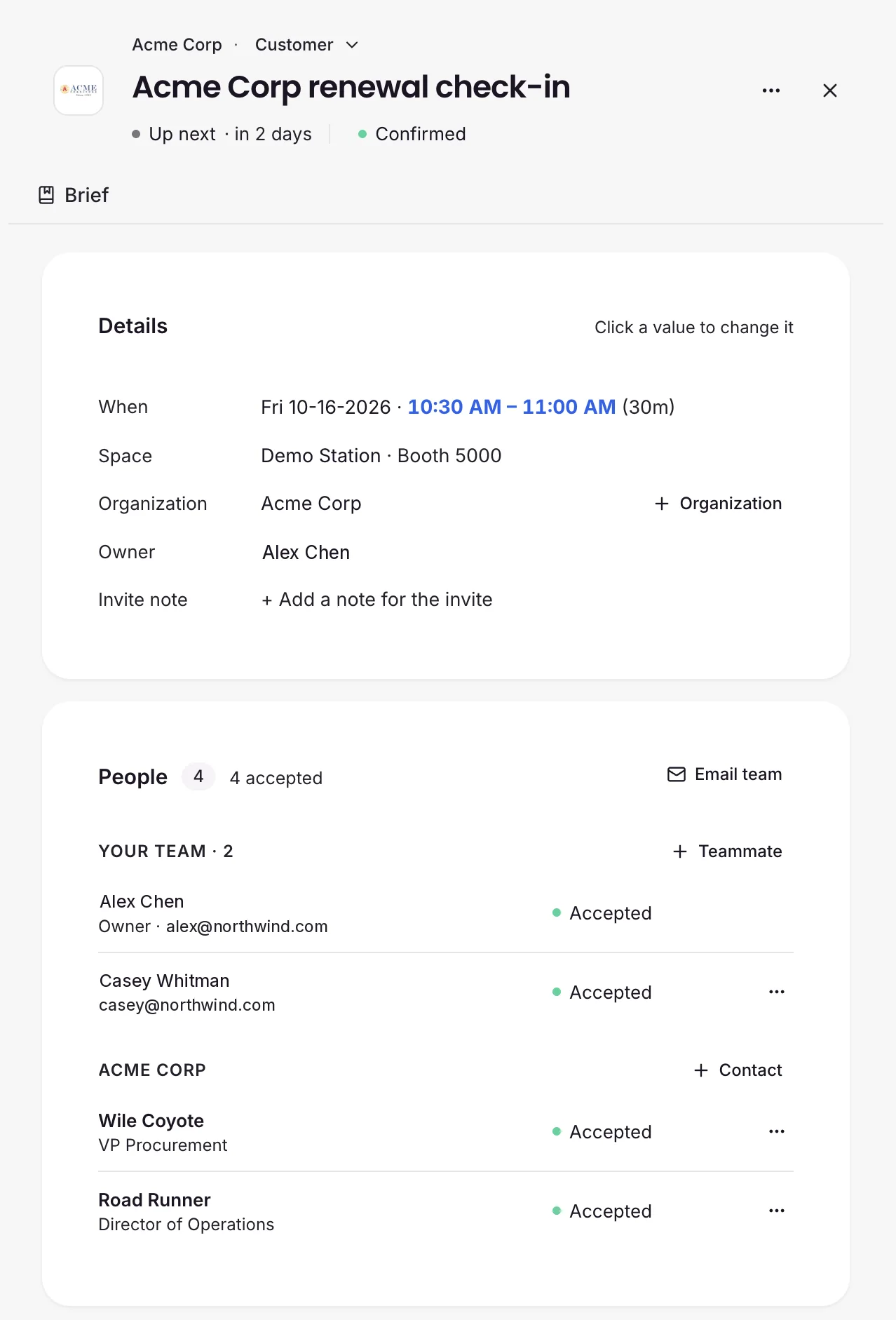
A Brief in knowhere is a prep document tied to a specific organization at a specific event. It appears automatically once an organization has a meeting scheduled at the event. It is pre-filled with the relationship history knowhere already has: every previous event the organization attended, every meeting held, attendance records, notes from prior summaries, and who on the team has interacted with them.
The manager or owner adds talking points, objectives, notes on the current deal stage, and anything else the team member needs to know before sitting down. Once published, every team member whose meetings include that organization can see it.
The Brief is updated with late intel too. Something changes the morning of the meeting. The manager can add a note to the Brief and it is there immediately. No email chain, no Slack thread to dig through.
Scoping
Team members see Briefs for the organizations they own. A team member carrying 15 targets does not wade through 200 Briefs for the whole event. Their reading list is automatically scoped to what is relevant to them. Managers see everything.
A document that requires effort to find is a document that gets skipped. One that is already scoped and waiting on the organization record gets read.
The Problem It Replaces
Before tools like this existed, the prep document for a customer meeting at a trade show was whatever lived in the account exec’s head. That works until the account exec is not at the event. Or until the team member taking the meeting is new to the organization. Or until there are 40 customer meetings across three days and nobody has time to build prep documents from scratch for each one.
knowhere builds the Brief from the history your team already created. The institutional knowledge does not walk out the door with the one person who usually holds it.