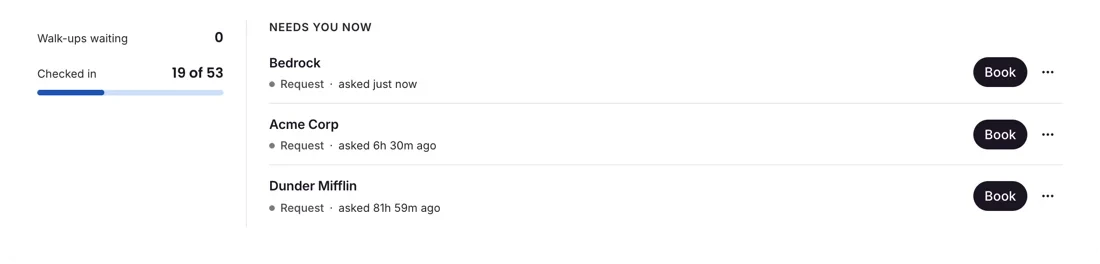
Every one of these answers exists somewhere in the system. The event manager knows where. And the event manager is now the human API that every team member on the floor pings to retrieve information they could technically find themselves but have not been trained on where to look.
The event manager’s actual job is to run the event. The routing of basic schedule questions is not that job. It is a tax on it.
What Know It All Does
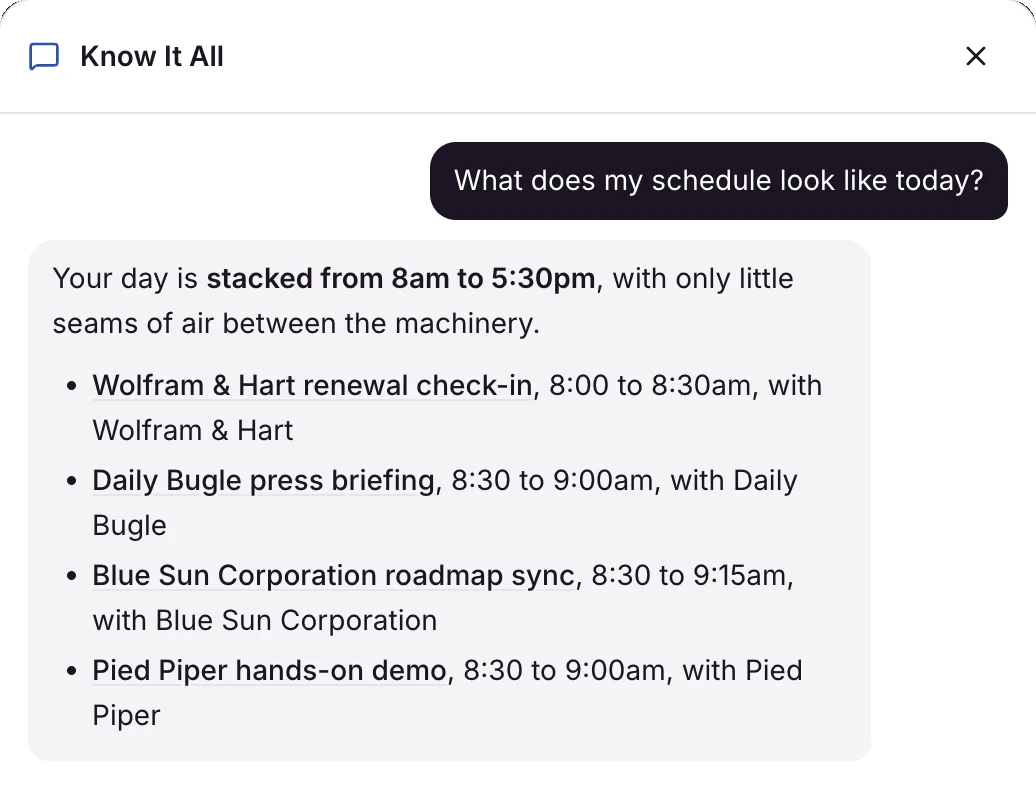
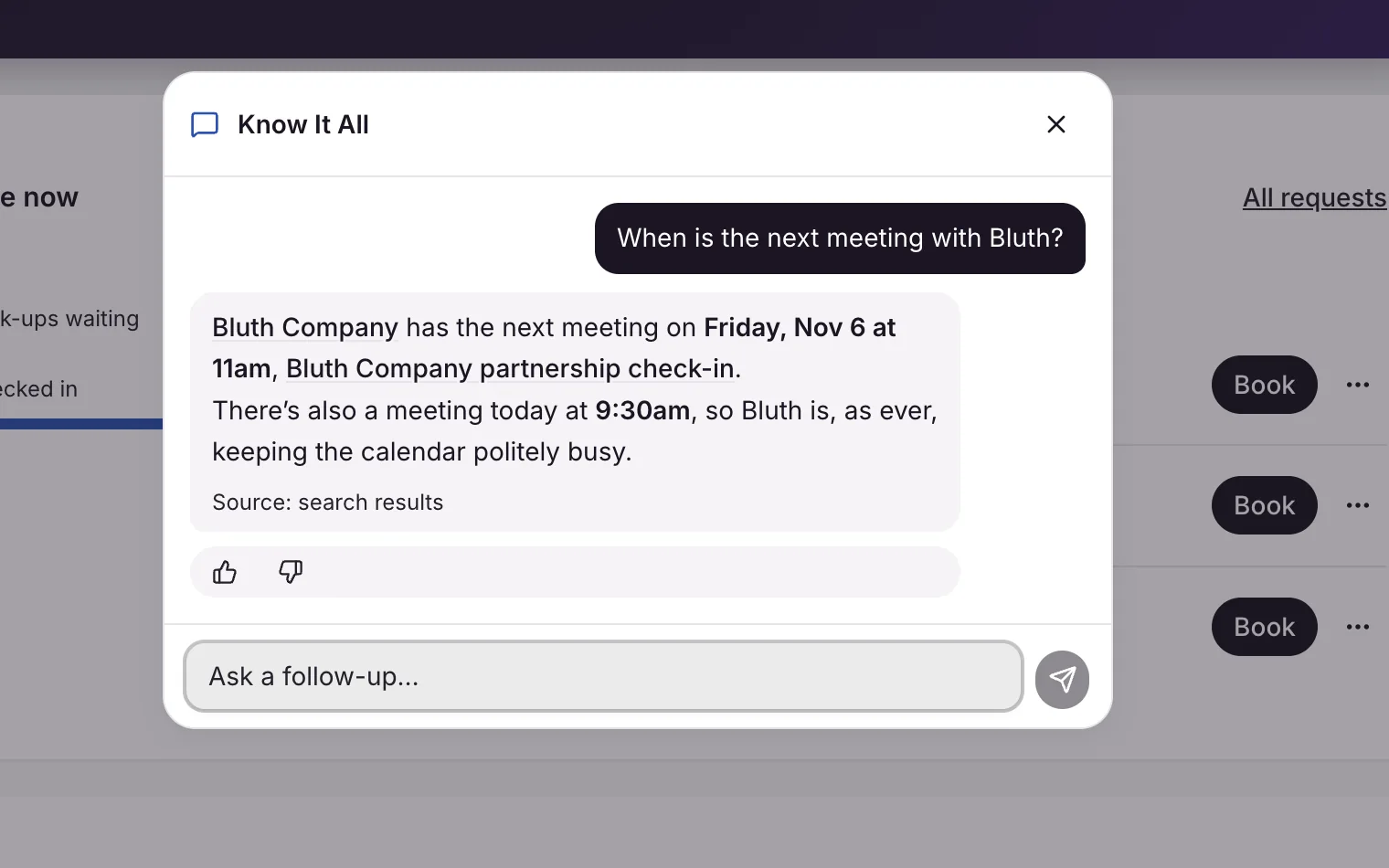
Know It All is knowhere’s built-in AI event search. It opens from the round blue button on every page, or from anywhere with Command K. Team members and managers type a question in plain language and get an answer that links directly to the real record.
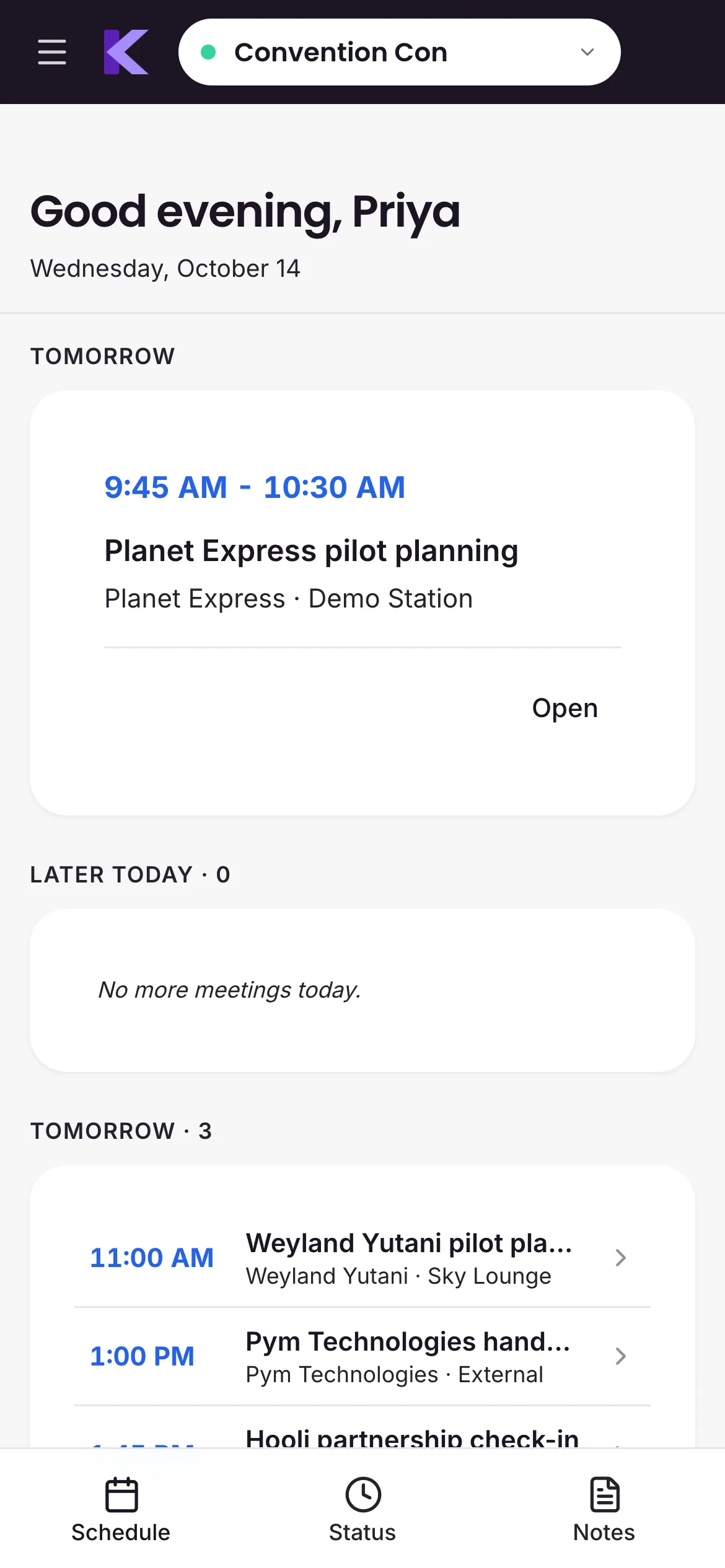
Schedule questions: “Who is free Tuesday at 2pm?” “Any conflicts on Thursday?” “What is my next meeting?” Organization questions: “Which targets do not have a meeting yet?” “Brief me before the Acme meeting.” “Who from FIS have we met with before?” Product questions: “How do I add a walk-in?” The same interface answers how-do-I questions about the product itself.
What Know It All Does Not Do
Know It All does not take action on the user’s behalf. It does not book a meeting, edit a record, or send anything without human confirmation. Asked to book a meeting, it finds the right contacts, checks for available time, validates the space, and hands back a pre-filled, conflict-checked booking form. The human confirms.
This is intentional. An AI that acts on event data without confirmation is a liability at a live event. The system does the finding and the pre-filling. The human does the booking.
Cross-Event Search
Know It All answers history questions across events. “What’s our history with this organization?” pulls from the organization’s meeting history across every event in the company’s record. The answer is in the system and Know It All surfaces it in seconds.